Between the Bell and the Buggy: A Standing Practice for the School Run
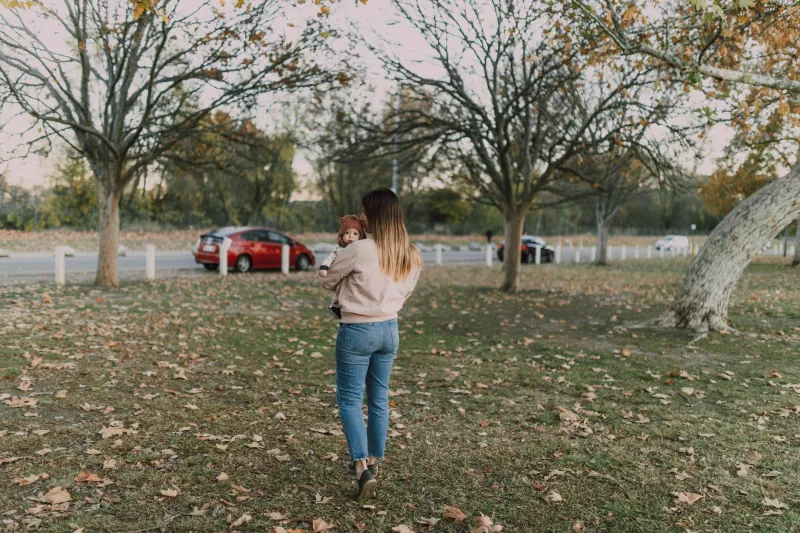
The school run has its own weather. It is made of hurry and waiting, of buggies and backpacks, of a child who cannot find a shoe and a clock that will not slow down. By the time the gates open, many parents and carers are holding more than a bag. The jaw is set. The shoulders have risen towards the ears. The breath has become shallow without anyone deciding that it should.
As November draws the afternoons in and the air turns cold, this transition can feel especially abrupt. We move from the demands of work or home into the demands of collection, and the body braces for the change. A full yoga practice may not be possible in the five minutes available. A discreet standing practice, however, can be. It requires no mat, no change of clothes and no audience.
Why the school gate asks something of the body
Transitions are not simply diary events. They are physical. The nervous system reads the approach to the school gates as a change in demand, even when the change is welcome. There may be the pressure of being on time, the social effort of greeting other parents, the sensory load of a crowded playground, or the simple fatigue of a day already full.
In response, the jaw often tightens first. The tongue presses against the roof of the mouth. The shoulders creep upwards, as though preparing to carry something. The breath becomes higher in the chest. None of this is a fault. It is a small, automatic attempt at readiness. The useful question is not how to banish the response, but how to meet it with enough space that it does not harden into the rest of the afternoon.
A five-minute standing sequence
This practice can be done in ordinary clothes and ordinary shoes. It is intentionally modest. Move only within a comfortable range, and stop if you feel dizzy or unwell.
1. Let the feet take the weight
Stand with the feet roughly hip-width apart, or sit tall if you are waiting in the car. Feel the whole sole of each foot in contact with the ground or the floor of the car. Let the weight be even. You are not trying to stand perfectly. You are simply reminding the body that there is support beneath it.
2. Soften the jaw
Allow the back teeth to part slightly. Let the tongue rest low and soft in the mouth. Exhale gently through the mouth, as if cooling a spoonful of soup. Then breathe in through the nose without effort. Repeat two or three times. This is often the quickest way to signal to the rest of the body that vigilance can be reduced.
3. Lower the shoulders without forcing them
Roll the shoulders slowly backwards once or twice, then let them settle. Imagine the collarbones widening rather than the shoulders being pulled down. There is no need to stand like a soldier. The aim is a little more space around the neck, not a new posture to maintain.
4. Breathe into the lower ribs
Place one hand lightly on the lower ribs, if the setting allows. Breathe in and feel the ribs widen sideways, rather than the shoulders lifting. Exhale slowly. Repeat for four or five breaths. If you are in a public place and prefer not to use a hand, simply imagine the lower ribs expanding like a small accordion.
5. Soften the gaze
Let the eyes rest on one point without staring. Allow the peripheral vision to widen. The playground can remain busy, but the visual field does not need to be narrowed to a single worry. This small shift often accompanies a change in breath and a less defended jaw.
Variations for car, pavement and playground
In the car
If you arrive early, keep the engine off and sit tall in the driver's seat. Place both feet flat on the floor. Unclench the jaw and let the shoulders rest against the seat back. Take three slow exhales through the mouth, then return to nasal breathing. Before you open the door, pause for one more breath and feel the support of the seat beneath you.
On the pavement
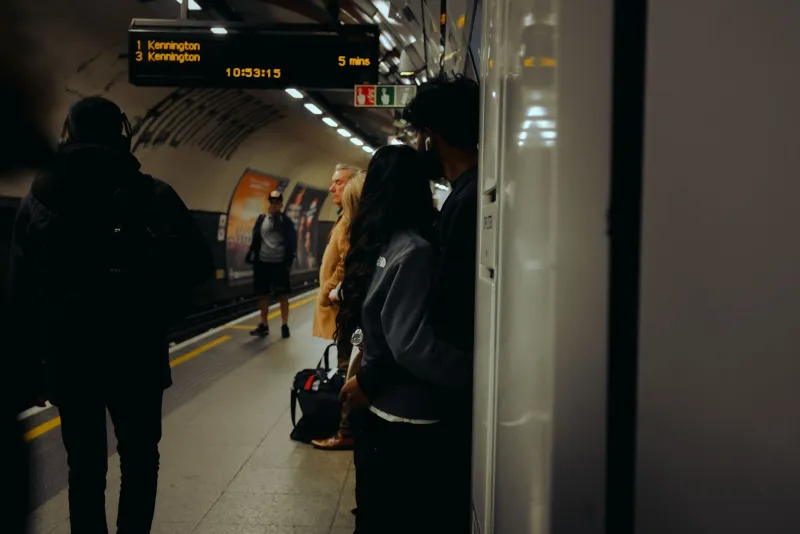
Stand near a wall or railing if you prefer not to feel exposed. Let the feet be grounded and the arms rest by your sides. Roll the shoulders once, soften the jaw and take two or three quiet breaths. You can do this while appearing to wait, which is, in fact, exactly what you are doing.
In a quiet corner of the playground
Choose a spot slightly away from the main crowd, if one is available. Let the gaze soften towards the middle distance rather than fixing on the gate. Breathe into the lower ribs and let the shoulders drop on the exhale. If a child arrives mid-practice, let the practice end there. The interruption is not a failure.
What not to force
The purpose of this practice is not to perform calm. It is to offer the body a small amount of choice. Do not force the shoulders down or the jaw open. Do not chase a deep breath if a gentle one is what is available. Do not treat the practice as another task to complete correctly.
It is also worth saying that a standing practice is not a substitute for medical care. If you are experiencing persistent jaw pain, shoulder pain, breathlessness or anxiety that interferes with daily life, speak to a GP or another qualified professional.
After the gate
Once the children are gathered and the conversation begins, the practice is over. There is no need to maintain a particular state. The value lies in the interruption: a few minutes in which the jaw softened, the shoulders found a little space and the breath was allowed to slow. That small pause will not solve the school run. It may, however, make the next hour a little less tightly held.
In the colder months, when the light is already going by half past four, this kind of brief practice can be a quiet act of care. It asks nothing of your clothing, your schedule or your surroundings. It asks only for the minutes you already have, between the bell and the buggy.