Waiting Well: A Standing Reset for Delayed Journeys
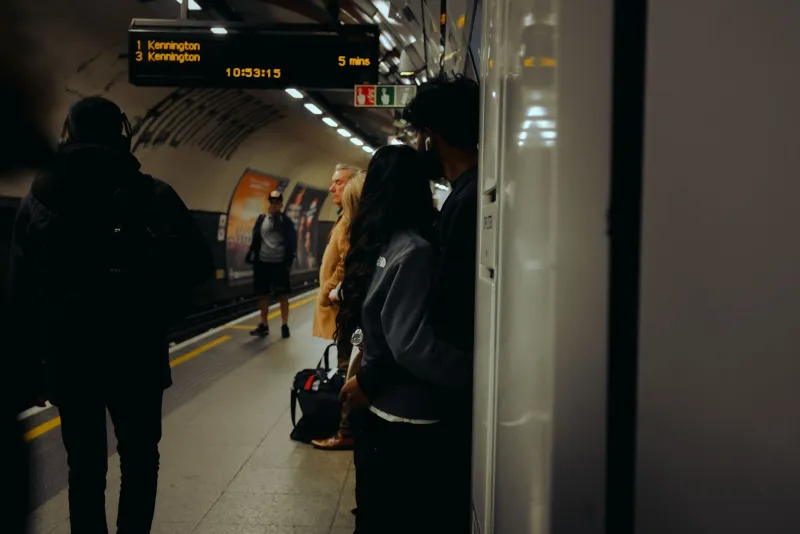
Delayed trains have a way of rearranging a day. The meeting slips, the supper goes cold, and the platform becomes a place of collective sighing. Yet the waiting itself can be used differently. At Pacific Yoga, we favour movement that meets people where they are: no mat, no changing room, no need to announce oneself to a carriage full of strangers. A platform, a bus stop or a hospital waiting room can hold a small reset, provided it is done with care and a little spatial awareness.
Begin with the ground beneath you
Stand with the feet roughly hip-width apart and let the weight settle evenly. The knees should remain soft rather than locked. Allow the spine to lengthen without forcing the shoulders back or the chin up. If you are carrying a heavy bag, place it between the feet and keep a hand on it; comfort and security matter more than perfect alignment.
A useful first movement is a slow shift of weight from one foot to the other. Let it be small enough that an observer would notice nothing more than a person adjusting their stance. As you shift, notice where the weight presses into the floor. This is not a trick to banish impatience. It is a way of reminding the body that it is still here, even when the timetable is not cooperating.
A shoulder release nobody will notice
Commuters often hold tension high across the shoulders and jaw. Rather than rolling the shoulders theatrically, try drawing small circles with the tips of the shoulders, no larger than a fifty-pence piece. Let the movement be slow enough to feel, and quiet enough to remain private.
On an inhale, allow the shoulders to rise a little towards the ears. On an exhale, let them drop. Repeat three or four times. Then tilt the right ear gently towards the right shoulder, without lifting the shoulder to meet it. Breathe there for two or three breaths, then change sides. If you are holding a phone, you can make a few slow wrist circles while you check the departure board. The aim is not to stretch aggressively but to interrupt the fixed shape that waiting often imposes.
Balance without performance
Balance is not a performance, and it should not become a public display. In a crowded space, use a pillar, wall or handrail. Stand close enough to support yourself if needed. A simple practice is to lift one heel a centimetre from the floor, lower it, and repeat on the other side. This small action asks the feet and ankles to wake up without requiring space.
If you feel steady and the area is not busy, you might shift more weight onto one foot for a breath, then the other. Do not close your eyes on a platform. Do not stand near the platform edge while practising balance, and do not attempt one-legged standing if you are unsteady, recovering from injury or in a crowd that could knock you.
A short grounding sequence for the wait
When the announcement says the train is delayed again, try this one-minute sequence. First, press both feet gently into the floor and feel the support beneath you. Next, notice three sounds around you, then two physical sensations, such as the weight of your coat or the temperature of the air. Finally, let the jaw soften and the tongue rest away from the roof of the mouth.
You can repeat the sequence at a bus stop or in a queue. Keep your attention lightly outward as well as inward. Grounding is not a retreat from the environment; it is a way of standing within it more steadily. If you are facing the road, step back from the kerb and remain aware of traffic.
Reading the space
Discretion is part of good practice. On a crowded platform, avoid blocking doors, stairs or ticket barriers. Keep bags close and do not make movements that take your arms into another person's space. If the area is too busy for even small movements, simply stand tall, breathe slowly and wait. That is still practice.
This guidance is general wellbeing content, not medical treatment. Stop if you feel dizzy, faint, short of breath or in pain. If you have a balance condition, recent injury, pregnancy-related concerns or any medical uncertainty, seek advice from a qualified clinician before adding new movements to your day.
Arriving rather than enduring
A delay will still be a delay. The practice does not make the timetable obey you. It does, however, change the quality of the waiting. When the train finally arrives, you may board less braced and less compacted by frustration. The platform becomes a place where you stood, breathed and returned to yourself, rather than simply a place where time was taken from you.