The Window Is Enough: A Rain-Settled Sequence for Staying In
There is a particular kind of British morning when the rain arrives before the day has properly begun. It drums on the window, softens the view of the street and makes the idea of leaving the house feel like an act of admin. Many of us respond by treating the weather as an obstacle: something to dress against, hurry through or complain about at the bus stop. But wet days can also offer a different invitation. Not a demand to be productive indoors, nor a instruction to cheer up, but permission to lower the volume.
This practice is built around that permission. It requires no mat, no specialist clothing and no decision to become a different person by lunchtime. A chair, a window and a few minutes are enough.
Begin with the window, not the mat
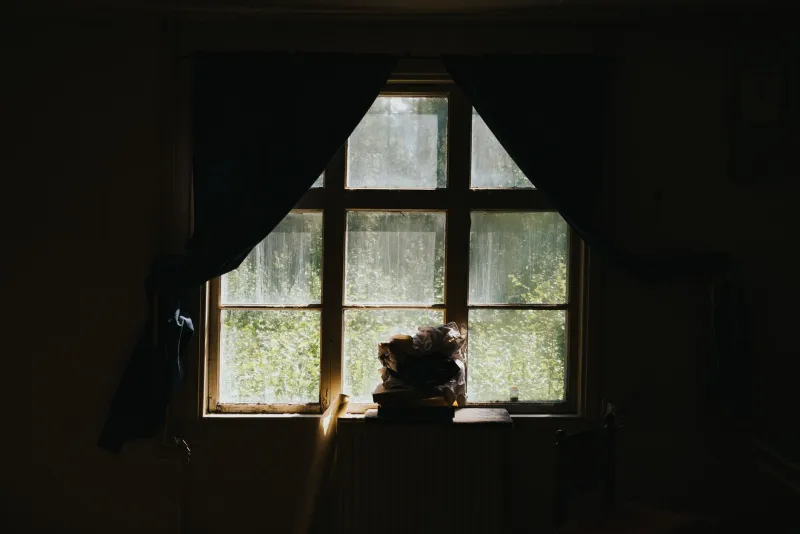
Choose a window that looks out onto something ordinary: a street, a garden, a patch of sky between buildings. Sit or stand near it, whichever is more comfortable. Notice the condensation at the edges of the glass, the runnels of water, the way the light changes when a cloud thickens. You are not trying to find the view beautiful. You are simply allowing it to be what it is.
Let your shoulders drop. Unclench your jaw. If you are seated, feel the chair take your weight. If you are standing, let your feet spread a little wider than usual. The practice has already begun.
A sound inventory
Spend three minutes listening. Rain on glass is rarely one sound. There may be a softer patter on the sill, a gutter emptying somewhere above, a car passing through surface water, the hum of a radiator or fridge. Without moving, name five sounds you can hear. If your mind wanders into the day's list, return to the next sound.
This is not a test of concentration. It is a way of giving the nervous system something steady to rest against. Rain is particularly useful for this because it is repetitive without being mechanical. It changes, but slowly.
Breath that asks for less
Place one hand on your lower ribs. Breathe in through the nose, gently, and let the out-breath be slightly longer than the in-breath. There is no need to count in a rigid way or to breathe deeply enough that you feel light-headed. Six quiet breaths are sufficient. If longer exhales feel uncomfortable, return to your natural breath and simply notice it.
The aim is not to force calm. It is to stop adding effort. On a wet day, that distinction matters.
The sequence: supported and small
Move through the following at a pace that feels almost too slow. Each movement can be repeated two or three times, or once if that is what the body prefers.
1. Seated shoulder release
Sit towards the front of a chair with both feet on the floor. Roll the shoulders forward, then up, then back, then down. Keep the movement small. Finish with the shoulders resting down and the hands in the lap.
2. Window-side side bend
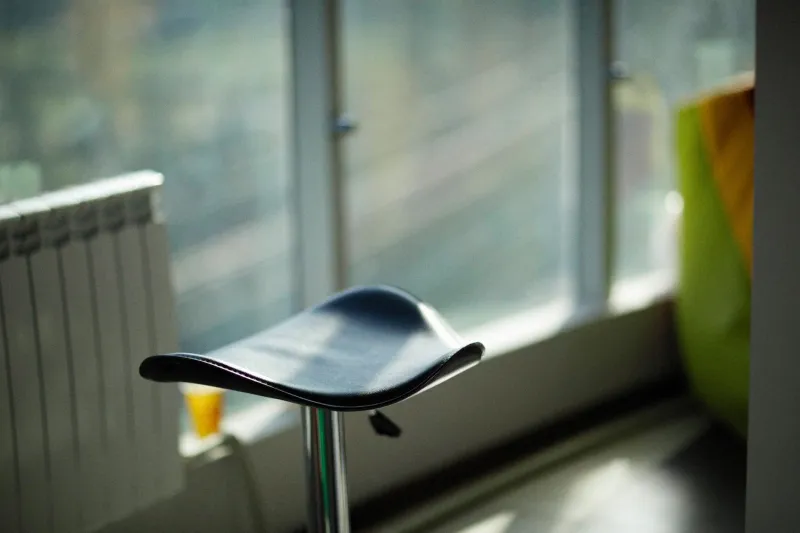
Rest one hand on the windowsill or the seat of the chair. Lean gently to that side, letting the other arm relax. Stay for two or three breaths, then return to centre and change sides. Do not stretch to the point of strain.
3. Seated twist
Place one hand on the back of the chair and the other on the opposite thigh. Turn gently towards the hand on the chair. Keep the spine tall rather than collapsing. Stay for two breaths, return to centre and change sides.
4. Supported forward fold
Bring your forearms to the windowsill or a table, with your forehead resting on your hands. Let the chair take your weight. If the sill is too high, use a table; if it is too low, stack a cushion. Stay for five slow breaths. This is a resting shape, not a stretch to endure.
5. Standing wall press
Stand facing a wall and place both palms against it at shoulder height. Step back until your arms are straight and your hips are over your heels. Press gently into the wall and feel the length through your sides and back. Stay for three breaths, then step in and let your arms drop.
Return to the glass
Finish where you began. Sit or stand by the window and let the sequence go. Notice whether the room feels any different. It may not. The aim is not a transformation but a small shift in pace.
The tea at the end
If you are able, make a warm drink and return to the window for two minutes without a screen. Hold the cup with both hands and watch the rain. This is not a reward for the practice; it is part of it. The ordinary act of standing still with a hot drink is one of the simplest forms of regulation available to most of us.
When the rain is not enough
Some wet days are simply wet. Others arrive on top of grief, exhaustion or low mood that has been building for weeks. This practice is not a treatment for mental health difficulties, and it is not a substitute for professional support. If low mood persists, speaks to your GP or contact NHS 111 for advice. The rain can be a companion, but it cannot do everything.
Making it repeatable
The practice works best when it is not made into a project. Leave a chair near the window if the room allows it. Keep a blanket within reach. On the days when the weather is too wild for a walk, or the thought of leaving the house feels like too much, remember that the window is enough. The rain is already doing its part.