The Glitter and the Afterwards: A Gentle Reset for Christmas Switch-On Overwhelm
There is a particular moment on a cold November evening when the high street changes. A crowd gathers, a countdown begins, and suddenly the facades are picked out in coloured light. For many people, this is a welcome signal that the festive season has started. For others, the switch-on is followed by a less welcome sensation: a kind of internal static that remains after the crowds have dispersed and the last bus has gone.
At Pacific Yoga, we are not interested in telling readers to avoid Christmas. The season matters, and so do the rituals that accompany it. But there is a difference between choosing how to take part and feeling obliged to take part in every bright, loud and crowded version of festivities on offer. This article is written for the latter experience: the reader who finds the switch-on more draining than delightful, and who would like a gentle way to settle afterwards.
The Overwhelm Is Not a Failure of Festive Spirit
Sensory overload is not a moral failing, and it is not evidence that someone has become cynical about Christmas. Town-centre switch-on events are, by design, dense experiences. There are amplified voices, repeated music, flashing displays, crowds moving in unpredictable directions, and the social pressure to appear pleased. Even for people who enjoy them, the cumulative effect can be considerable.
A low-light reset is not an attempt to cancel the season. It is a way of acknowledging that the body has a nervous system, and that nervous systems respond to environment. After an hour of bright, busy stimulation, it is reasonable to want a quieter room, softer light and a slower pace. The practice below is designed for that transition. It is short, supported and deliberately undemanding.
Begin by Lowering the Light
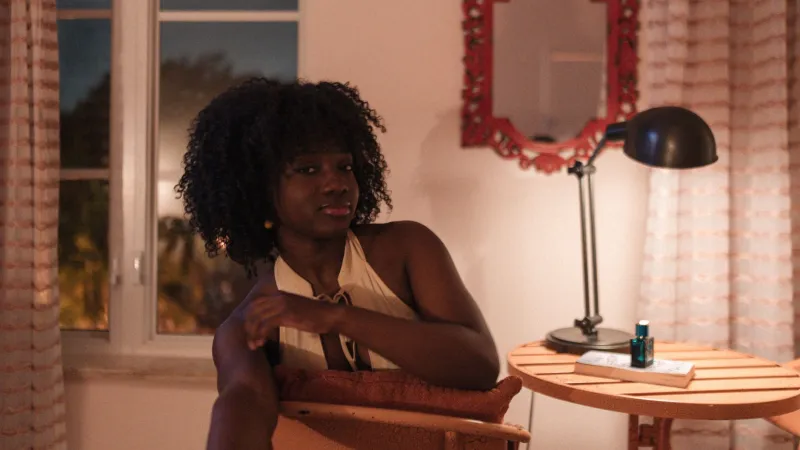
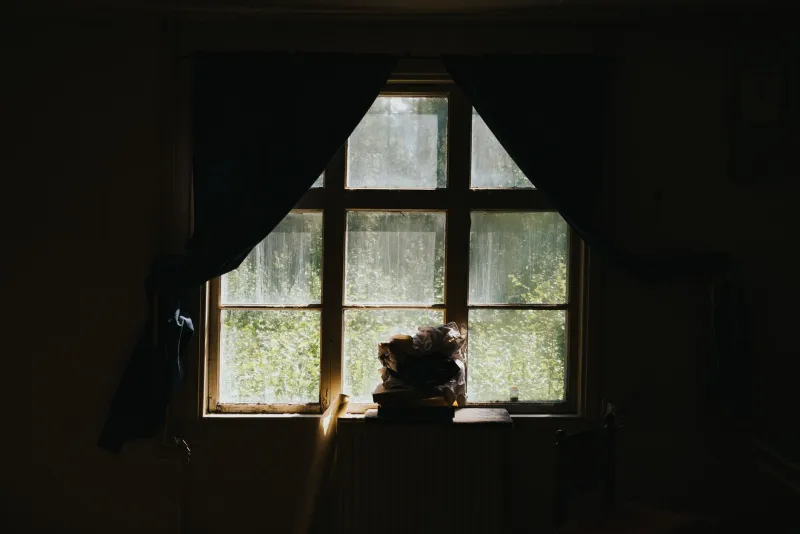
Choose a room where you can close the curtains and reduce the main overhead light. Use one lamp if possible, or light the room from the side rather than from above. Put your phone face down or, better still, in another room for the duration of the practice. If you have come in from the cold, change out of damp outer layers and put on something warm and loose.
Sit on a chair or on the floor with your back supported. Let your eyes adjust to the lower light rather than filling the silence immediately with a screen. You might notice the contrast between the earlier brightness and the relative dimness of the room. Do not try to force calm. Simply allow the sense of sight to become less dominant.
A Supported Forward Fold for the Aftermath
A supported forward fold can offer a useful change of perspective after a visually busy event. It reduces the field of view, softens the eyes and gives the back a chance to round without effort.
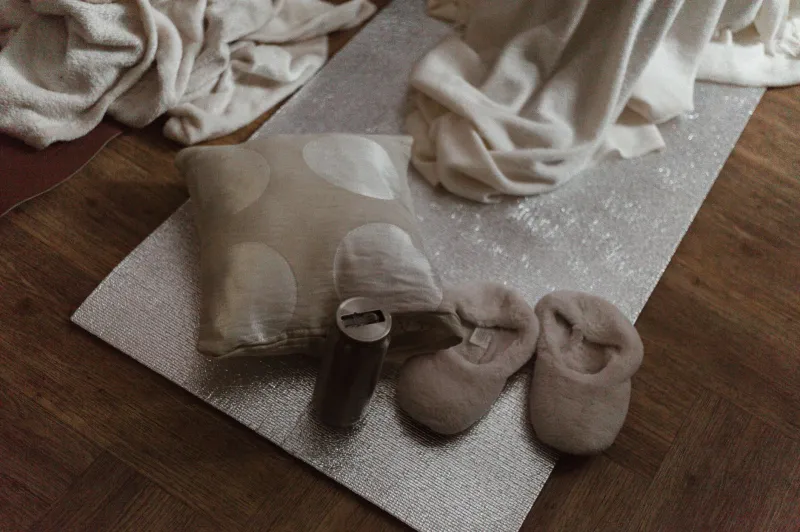
If you are using a chair, sit towards the front of the seat with your feet flat on the floor. Place a cushion or folded blanket on your thighs. Fold forward and rest your forearms on the cushion, letting your head settle. If this feels too low, rest your forearms on a table instead. If you are on the floor, sit on a cushion and place a bolster or firm pillows over your legs, then fold forward and rest your forehead on the support.
The aim is not to stretch. The aim is to be supported. Let the weight of the head be carried by the cushion or bolster. Stay for five slow breaths, or longer if it feels comfortable. If you feel pressure in the abdomen or difficulty breathing, come up and try a simpler seated position.
The Longer Exhale as a Practical Anchor
After the fold, return to an upright seat. Let your hands rest in your lap. Breathe in through the nose at a comfortable depth, then exhale for slightly longer than you inhale. There is no need to count rigidly. A gentle ratio of four counts in and six counts out is enough for many people, but comfort matters more than precision.
Continue for six to eight breaths. The longer exhale is not a lever that switches off the nervous system. It is a modest signal, offered repeatedly, that the environment is now quieter. If breathing feels strained, return to your natural rhythm and simply rest one hand on your lower ribs. The practice should feel like a reduction of effort, not an additional task.
Permission to Skip the High Street
It is entirely acceptable to decline the high street altogether. You might mark the season by watching the lights from a quieter side street, attending a smaller local event, leaving before the countdown, or sending good wishes to those who enjoy the crowds. Noise-cancelling headphones are not antisocial; they are a practical tool. Arriving late and leaving early is a legitimate way to participate.
If you do attend a switch-on, consider giving yourself a clear exit. Tell a friend you may leave at a certain time. Choose a meeting point away from the loudest speakers. Remember that festive participation is not an all-or-nothing contract. The season can be marked in a way that respects your sensory limits.
A Small Ritual for the Season
The lights will stay on across town centres for weeks. You do not have to be illuminated by every one of them. A dimmed room, a supported fold and a longer exhale will not solve the complexities of Christmas, but they can help to close the gap between the noise outside and the quiet you need inside. That is a modest aim, and a sufficient one.