Room to Breathe: A Restorative Wall Sequence for Compact British Homes
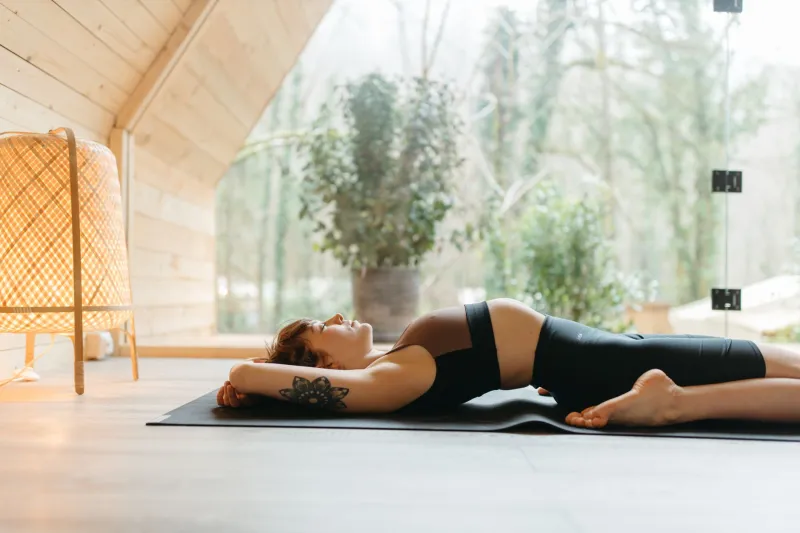
British homes are often asked to be many things at once: office, bedroom, dining room and refuge. In a rented flat or a shared house, the idea of a dedicated yoga space can feel like a luxury. Yet a clear stretch of wall, roughly the width of a doorway, is one of the most reliable props available. It does not need storing, it does not ask for a deposit, and it will not mind if the room is also where the laundry dries.
This sequence is designed for that reality. It uses a wall and a folded towel. It is quiet enough for thin party walls, compact enough for low ceilings and adaptable enough for floors that carry every footstep to the flat below. The aim is not to perform a perfect pose. The aim is to let the wall take some of the work, so the body can soften.
Before you begin
Choose a wall with clear floor space in front of it. A bathroom towel folded lengthways will support hips, knees or forehead; a smaller hand towel can be rolled for the neck. A yoga mat is helpful but not essential. A rug or blanket will do.
Set a timer for three to five minutes for each pose, or stay for ten slow breaths. Move slowly enough that the neighbours do not hear a thud. If you live above someone, pad the floor and lower limbs with control rather than letting them drop. If the ceiling is low, keep arms below shoulder height and avoid overhead reaches. None of these adjustments make the practice lesser. They make it fit.
1. Legs-Up-the-Wall with a Folded Towel
Lie on your back with one hip close to the wall. Fold a bath towel lengthways and place it under the hips for gentle support. Rest both legs up the wall, knees soft, arms by your sides. Let the wall hold the weight of the legs.
Stay for five to ten minutes. If the back feels exposed, place a rolled towel under the lower back. To come out, bend the knees, roll to one side and pause before sitting. Lower the legs slowly so the floor does not receive a sudden knock.
2. Wall-Supported Child's Pose
Kneel facing the wall with the knees wide. Fold a towel under the forehead, or under the knees if the floor is hard. Reach the arms forward and rest the palms on the wall, elbows soft. Press the hands lightly into the wall and let the spine lengthen.
Stay for two to three minutes. If the knees complain, place a cushion behind the knees or sit on a block. This pose is quiet and contained, which makes it useful in a shared flat where the walls are thin and the day has been loud.
3. Forearm Wall Fold
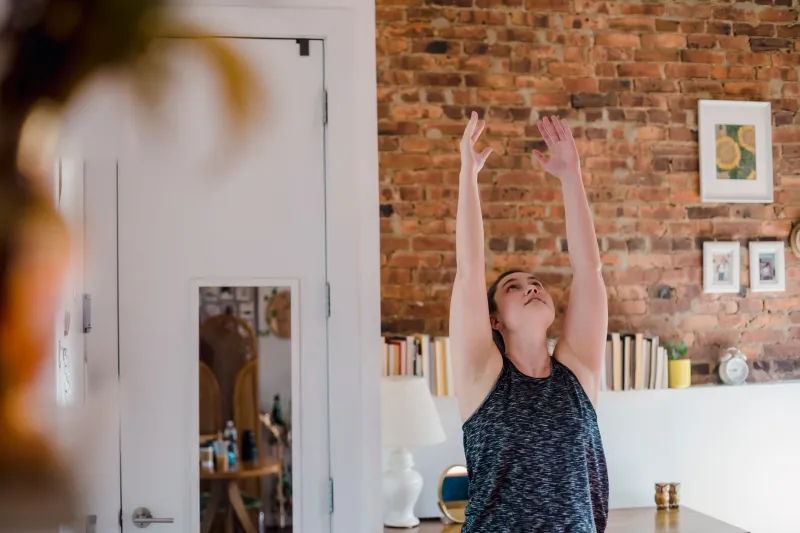
Stand an arm's length from the wall with the feet hip-width apart. Place the forearms on the wall, elbows bent, with a folded towel beneath them. Step back and hinge from the hips until the spine is long and the neck is soft.
Stay for five to eight breaths. Keep the elbows below the shoulders if the ceiling is low or the room is cramped. Step forward slowly to come out. The wall offers resistance without demanding balance, which makes this fold more restful than it first appears.
4. Standing Side Bend with Wall Support
Stand side-on to the wall. Place the nearer forearm on the wall at shoulder height, with a towel under the arm. Step the outer foot away and lengthen the side body. Let the wall anchor the arm while the ribs soften.
Stay for five breaths, then change sides. If the ceiling is low, keep the arm lower and the stretch smaller. If the floor is noisy, step softly and avoid bouncing. The pose should feel like a slow opening, not a reach towards a target.
5. Seated Wall Rest
Sit with the back against the wall and the legs crossed or extended. Place a rolled towel behind the lower back for support. Let the shoulders drop and the hands rest in the lap. Close the eyes or soften the gaze.
Stay for five minutes. This is the quietest pose in the sequence and the one most likely to be underestimated. In a small home, sitting upright with support can be more restorative than a complicated shape. The wall does the work of holding you up.
A practice for real rooms
The wall is not a compromise. It is a steady, generous prop that asks nothing of you and takes up no floor space. In a British flat, where rooms are often shared and sounds travel, that kind of support matters. A folded towel and a clear wall can turn a corner of the bedroom into a place to pause.
Practise this sequence once or twice a week, or use one pose on a difficult afternoon. Keep the room warm, dim the lights if you can, and let the practice be smaller than you think it needs to be. The body does not need a studio to rest. It needs somewhere safe to lean.