The Long Way Down From the Lights: A Floor-and-Wall Reset for Market-Weary Evenings

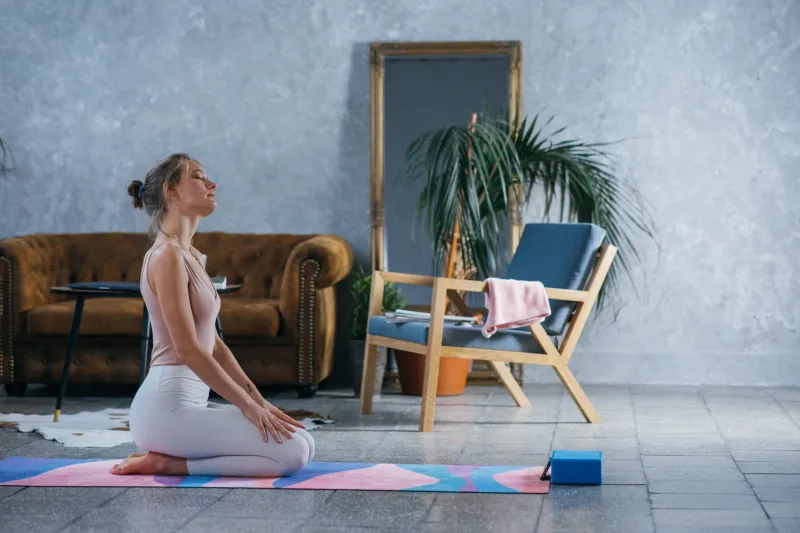
Photo by Photo by Brooke Balentine on Unsplash on Unsplash
There is a moment, somewhere between the last stall and the car park, when the evening announces what it has cost you. The carrier bags have begun to cut into the fingers. The cold has moved from the face to the bones. The lights, which looked so generous an hour ago, now seem to be arriving all at once, and the noise of the crowd has thinned into a ringing that follows you up the street. Nothing has gone wrong. It has simply been a great deal.
This is not the tiredness of a long walk, though there has been walking. It is a compounded fatigue: cold air tightened around the shoulders, ankles negotiating cobbles in the dark, calves held in a low brace against the uneven ground, the whole body kept mildly alert by crowds and sound and the constant small arithmetic of not colliding with anyone. Add mulled wine, a bag of something heavy, and a hundred thousand bulbs, and the nervous system has been working a shift it did not apply for.
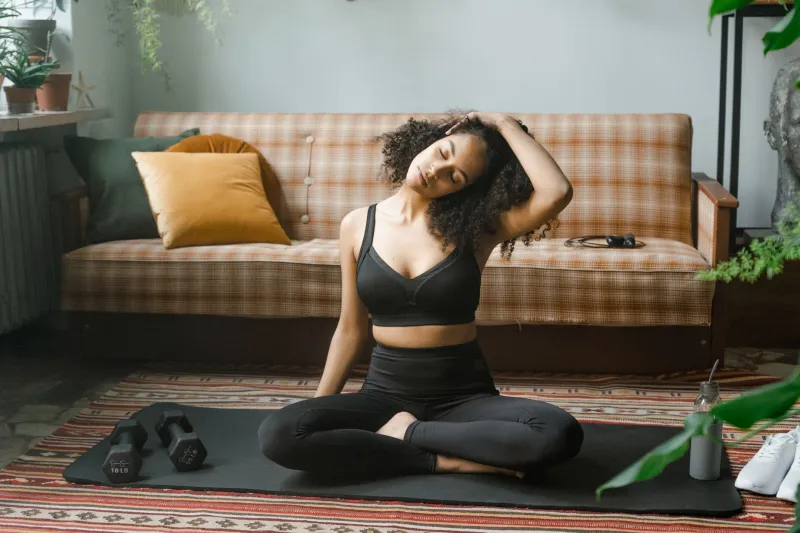
The practice below is for that evening, or the following one. It is deliberately short. It can be done in a warm room with the lights low, in the clothes you came home in, on a mat or a rug or a folded blanket.
First, lower the volume
Before the body can settle, the senses need a smaller room to settle into. Take off your coat and shoes. Put the bags down somewhere you will not have to look at them. Dim the overhead light if you can, or turn it off and leave a lamp on. Put the phone face down, or in another room, and resist the small reflex to photograph the practice or to check what time it is.
Two or three minutes of simply sitting, with the back supported and the hands resting, is not a preliminary. It is part of the work. The body has been braced; it needs to be told, in a language slower than words, that the bracing is finished.
The practice: wall, floor, breath
Move through these in order, or choose two. There is no requirement to complete the sequence, and no benefit in hurrying it.
1. Legs up the wall (three to five minutes)
Lie on your back with the hips a comfortable distance from a wall and the legs resting up it, heels towards the ceiling. A folded blanket under the pelvis is pleasant but not essential. Let the arms rest out to the sides, palms up. The feet and calves, which have been the body's shock absorbers all evening, are given a chance to drain and soften. Breathe without trying to deepen anything. If the backs of the legs feel tight, slide the hips a little further from the wall.
2. Standing calf stretch at the wall (thirty to forty-five seconds each side)
Come to standing and place both hands on the wall at shoulder height. Step one foot back, keeping the heel down and the back leg straight, and bend the front knee until you feel a gentle stretch through the calf. Keep the back foot's toes pointing forward rather than turned out. Switch sides. This is the antidote to cobbles, and to the small, continuous balancing act of a crowded street.
3. Seated figure-four on the floor (forty-five seconds each side)
Sit on the floor with the knees bent and the feet flat, hands behind you for support, or lie on your back if sitting is uncomfortable. Cross one ankle over the opposite knee, keeping the foot flexed, and let the crossed knee fall away from you. The hips, which have spent the evening absorbing uneven ground, tend to release here without much persuasion. Change sides.
4. Shoulder opening at the wall (one to two minutes)
Stand a forearm's length from the wall and place both forearms against it, elbows at shoulder height, palms flat. Step back until the arms are straight and the chest begins to open. Keep the ribs soft; do not let the lower back take the work. Stay for several slow breaths, then step in and rest. If the shoulders are very tight, bring the elbows lower and the hands closer together.
5. A last few breaths, lying down
Lie on your back with the knees bent, feet on the floor, one hand on the lower ribs and one on the belly. Let the exhale be slightly longer than the inhale without forcing it. Six or eight breaths is enough.
A word on sensory overwhelm
It is worth naming what happens at a Christmas market, because the naming is itself a kind of relief. The senses are not designed for continuous, close-range stimulation: a thousand small lights, a dozen overlapping songs, the smell of sugar and fried food, the pressure of bodies on all sides, the flicker of a funfair ride at the edge of vision. The nervous system does what it is built to do, which is to stay alert in a busy place. It is not a failing that it takes a while to stand down afterwards.
If the room still feels loud, use the oldest remedy there is: orient. Look slowly around the space you are in and name three things you can see. Feel the floor under your feet, or the blanket under your hands. Notice the temperature of the air on your face. This is not a relaxation technique so much as a way of telling an alert body where it actually is.
A warm drink helps. So does a proper meal, eaten sitting down. Alcohol will not help the settling, and neither will another screen.
The temptation to make it a task
The risk with any practice written down in order is that it becomes a list to complete, and the evening becomes a small performance of recovery. It is not that. Two poses is a practice. Lying on the floor for four minutes with the legs up a wall is a practice. Sitting in the dark with a cup of tea and doing none of the above is also, on some evenings, the right answer.
Stop when the edge softens rather than when the sequence is finished. Leave the last repetition undone if the body has already begun to yawn. The purpose is not to reset the evening to zero, but to let it end somewhere other than at full volume.
The lights were lovely. They were also a lot. Both can be true, and the walk home is allowed to be quiet.